
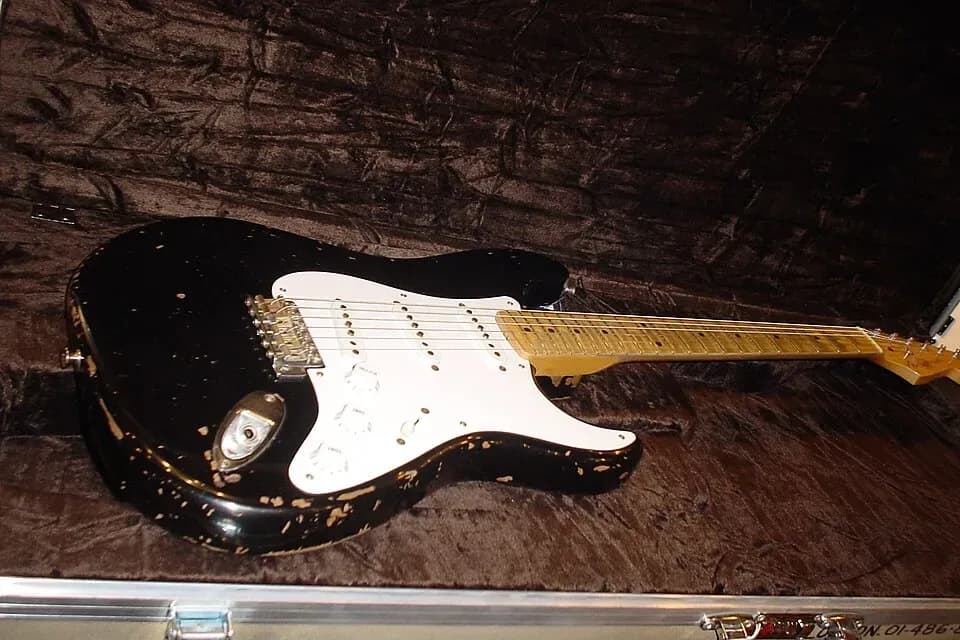
Fender Stratocaster
“Reversed and flipped”
Main guitar, strung for left hand on a right handed body.
Mid 1960s Stratocasters with single coil pickups, flipped so the bridge pickup angle and tremolo sit reversed.
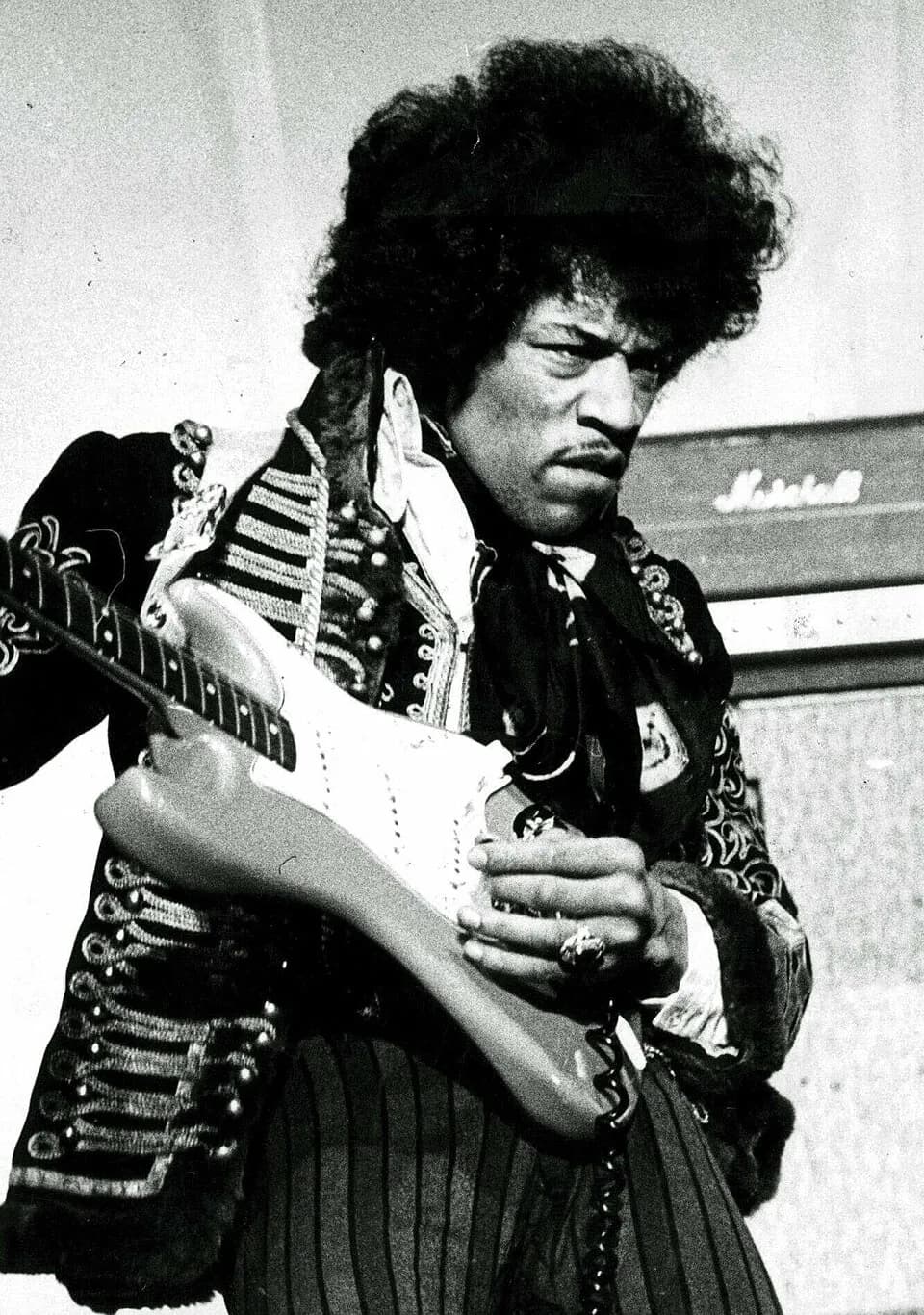
Seattle, United Statesrock, blues, psychedelic
Reinvented the electric guitar with feedback, fuzz and a vocal sense of phrasing.
Guitarist Profile
“Treat the amp and pedals as part of the instrument, not as accessories.”
Seattle, United States
47.61° N, -122.33° W
Gear & Tone Atlas
VerifiedThe instruments, pedals, amplifiers, and signal chain that shape the sound of Jimi Hendrix.
What defines the sound
A right handed Stratocaster strung and flipped for left hand play gives the reversed bridge pickup a brighter top end. Through cranked Marshall stacks the single coils break up into a singing, vocal sustain. Fuzz Face and Octavia add saturation and upper octave bloom, while a wah and Uni-Vibe bring movement. The volume control is used like a second tone, cleaning up the amp without touching the pedals.
From guitar to amp
Fender Stratocaster
Main guitar, strung for left hand on a right handed body.
Dallas Arbiter Fuzz Face
Primary fuzz for saturated lead and rhythm.
Vox
Expressive filter sweep, often parked for vowel like tones.
Roger Mayer Octavia
Upper octave fuzz for piercing solo textures.
Univox Uni-Vibe
Watery chorus and vibrato movement.
Marshall Super Lead 100
Loud, breaking up clean platform for sustain and feedback.
Instruments
“Reversed and flipped”
Main guitar, strung for left hand on a right handed body.
Mid 1960s Stratocasters with single coil pickups, flipped so the bridge pickup angle and tremolo sit reversed.
On the board
Primary fuzz for saturated lead and rhythm.
Expressive filter sweep, often parked for vowel like tones.
Upper octave fuzz for piercing solo textures.
Watery chorus and vibrato movement.
Amplification
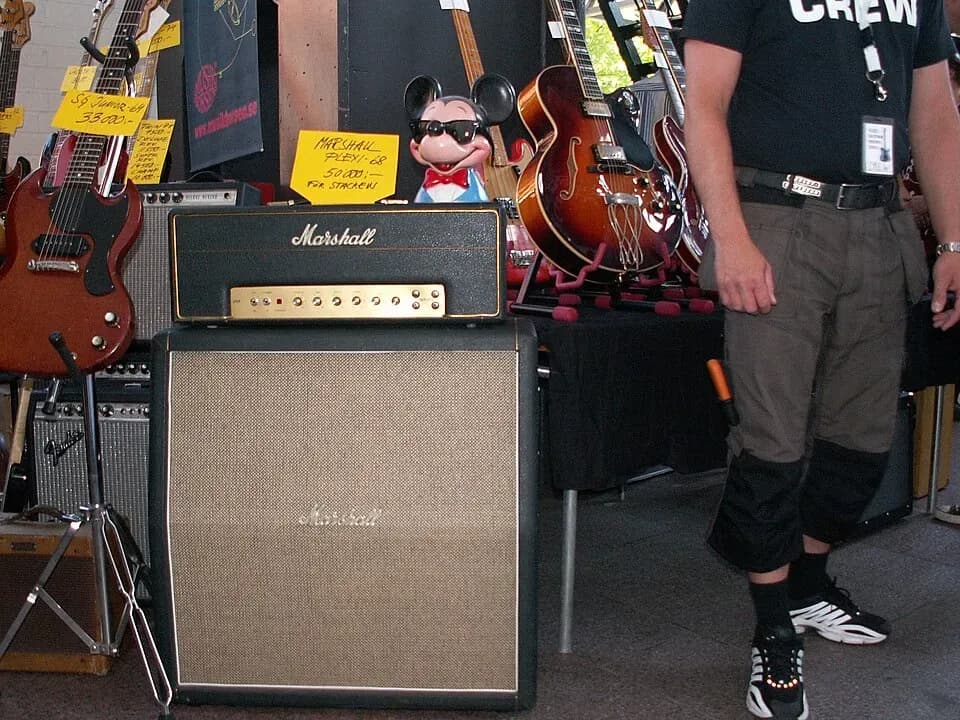
Loud, breaking up clean platform for sustain and feedback.
Across the years
“Reversed and flipped”
Main guitar, strung for left hand on a right handed body.
Mid 1960s Stratocasters with single coil pickups, flipped so the bridge pickup angle and tremolo sit reversed.
Primary fuzz for saturated lead and rhythm.
Expressive filter sweep, often parked for vowel like tones.
Upper octave fuzz for piercing solo textures.
Watery chorus and vibrato movement.
Loud, breaking up clean platform for sustain and feedback.
For players
Verification
Every gear claim links to a source. Items marked probable or inspired-by are not fully confirmed.
Keep exploring
Newsletter
Monthly notes on lessons, events and gear.